Do you like potato?

Tuesday, 9 June 2015

The object that I had 3D printed is a potato. I made this potato in the Inventor CAD software and then uploaded the file to a website and payed for them to print it for me.
My potato
I think for most things made, when made by a human I can expect a certain level of variance between products. Whereas with a machine made product, I know each will be the same every time.

Working drawings are needed to fabricate a product for a human I believe. This is because a human needs to understand the dimensions of each side of an object. Whereas, for a machine, a CAD model is all that is needed. This is because a machine can correctly and easily interpret the dimensions from the CAD model and then apply them to the materials needed to make the product.
More potato
Austyn's potato

Austyn's and my potato side by side.

Wednesday, 13 May 2015

Maker Faire Show Case

The design I have come up with for our booth at Maker Fair reflects the design of the game. I had envisioned a mini-coliseum with the computer at the center. Reflecting the maze layout of the game, and itself being an interesting piece to look at. Which would likely attract visitors.
Drawing of My Vision of Showcase

Tuesday, 5 May 2015

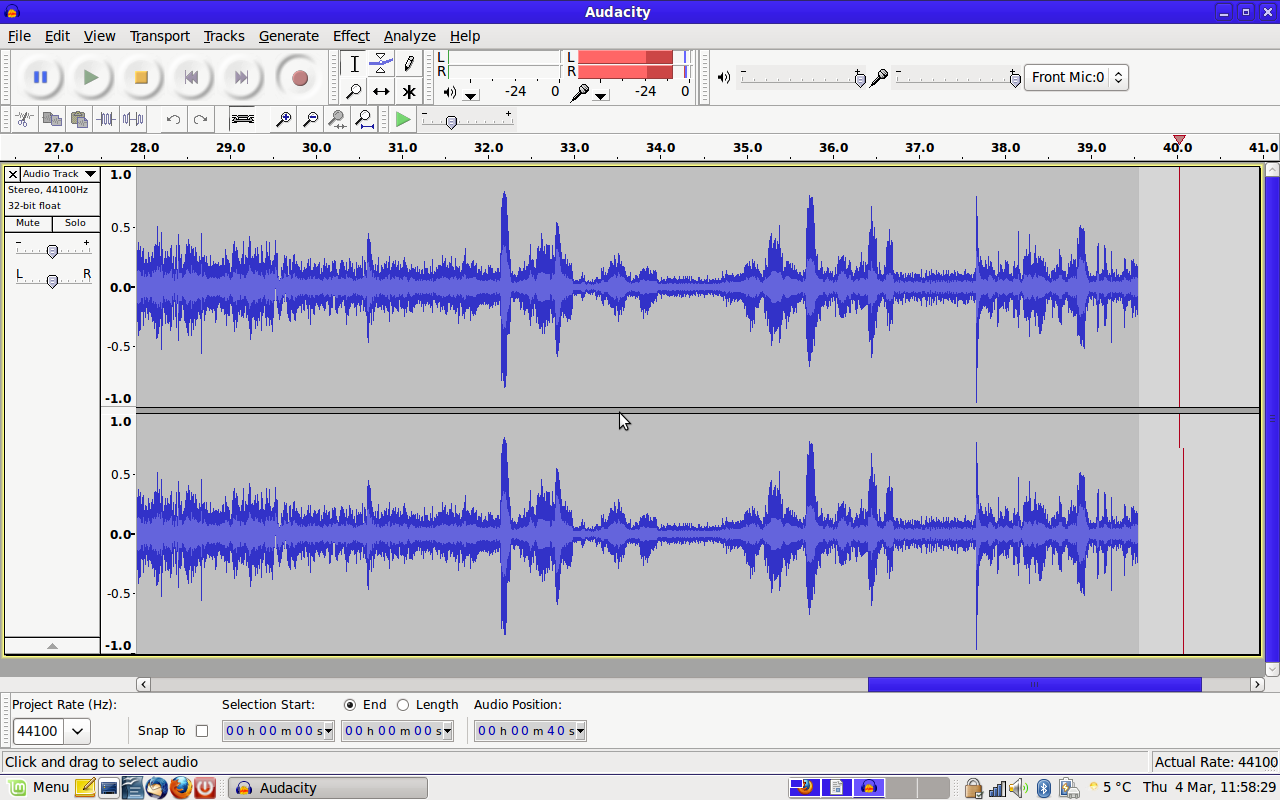
This week I have started to use the Audacity program. I have along with Sasha started to compile some music for the game. And with Austyn, and Sasha recorded the dialogue for the game. To record the dialogue we borrowed the drama department's microphone and had Ben, Jake, Matthew read the lines. An audio clip we recorded with Benjamin as our narrator.

Game Design Works In Progress

This week I started to work with the audio engineering of our video game. Ryan suggested that we use Audacity as our audio editing software as it is free. So, we emailed the ROP people to come and install it on some of our classroom computers.
Screenshot of Audacity editing software

Tuesday, 24 March 2015

I believe I am qualified to be a sound engineer for our Maker Faire 2015 video game project. An audio engineer records, manipulates, mixes, and produces sounds. Most audio engineers create and manipulate sounds for movie, radio shows, TV shows, an videogames. I frequently consume audio media and posses utilities to acquire and possibly create quality sounds. I have also edited the sound for school video projects.

Thursday, 19 March 2015

Dimensoning Standards

For practicing my dimensioning I created several CAD models from work sheets provided by PLTW.


Thursday, 5 March 2015

Maker Faire Game Research

Dota 2
Dota 2 is a MOBA or Multiplayer Online Battle Arena. It is in the 3rd person view focusing on top down. It plays very similarly to moving units in an RTS, except in Dota 2 you only(usually) control one unit, your hero.
Dota 2 was developed by Valve using the Source engine. Dota 2 was created because the WarCarft 3 engine was becoming outdated and the current developer of DotA, Icefrog, wanted to continue making DotA better. So Valve acquired the rights to create Dota 2.
Dota 2 does interest me very much.

https://www.youtube.com/watch?v=UjZYMI1zB9s
https://www.youtube.com/user/nigmanoname

Thursday, 26 February 2015

Reverse Engineering

1. Visual Analysis:

2. Functional Analysis:
   1. The function of the object is for children to practice puzzle solving skills and learn the basics of design.
   2.
   3a. The snap on ends of rhe axles allow the wheel to rotate by allowing the part of the axel behind the snap on section to be thinner than it and giving the wheel room to rotate.
  b. My hypothesis was correct.
3. Structural Analysis:
 
1.  Visual design principles and elements impact the appeal of the product by appealing to someone's sense of design. By designing a project in a certain way it will appeal to certain people.
2.  The black box represents the unknowns that could be imputed or outputted.
3.  Engineers reverse engineer products to understand how exactly the product works. They would do this is perhaps they preferred to have the physical touch of the parts and understanding rather than looking at schematics. Reverse engineering is the act of taking apart something with the intention of preserving everything to understand how it all works together.
4.  

Thursday, 19 February 2015

CAD Model Features

During a spree of CADing I almost completed the passenger base for the Automoblox T9 toy car.

The most challenging part was staying focused and logically solving problems. Taking two days to solve this problem especially that of the star was a challenge to say the least.

Thursday, 12 February 2015

Teach What You Know

One of my questions for Inventor was how to make a circle. This video below taught me how to make a circle.
www.youtube.com/watch?v=3QJanrd_7jc

Friday, 6 February 2015

Form Follows Function

This is a redesign of proud and amazing Russian space rocket Soyuz. It is improved because it is much bigger than tiny Russian rocket. This is big Polish space rocket, almost double the size, at almost 50 feet tall!

Thursday, 29 January 2015

Cube Reflection Post

Creating this cube was a good challenge. Especially designing it to pose a challenge to potential solvers. The picture below is the cube in its finished state.

It took 5 people an average of 5.6 minutes to solve the puzzle. With two people taking 7 minutes, another two taking 5 minutes, and one person taking 4 minutes.


Wednesday, 21 January 2015

Cube Design Resources

The following are images of the cube design. Including pictures of the cubes created in CAD software.


Thursday, 8 January 2015

Cube Statistical Analysis

The following data represents the mean, median, range, mode, maximum value, and minimum value of my data points.